Four stages
Egg, larva, pupa, adult
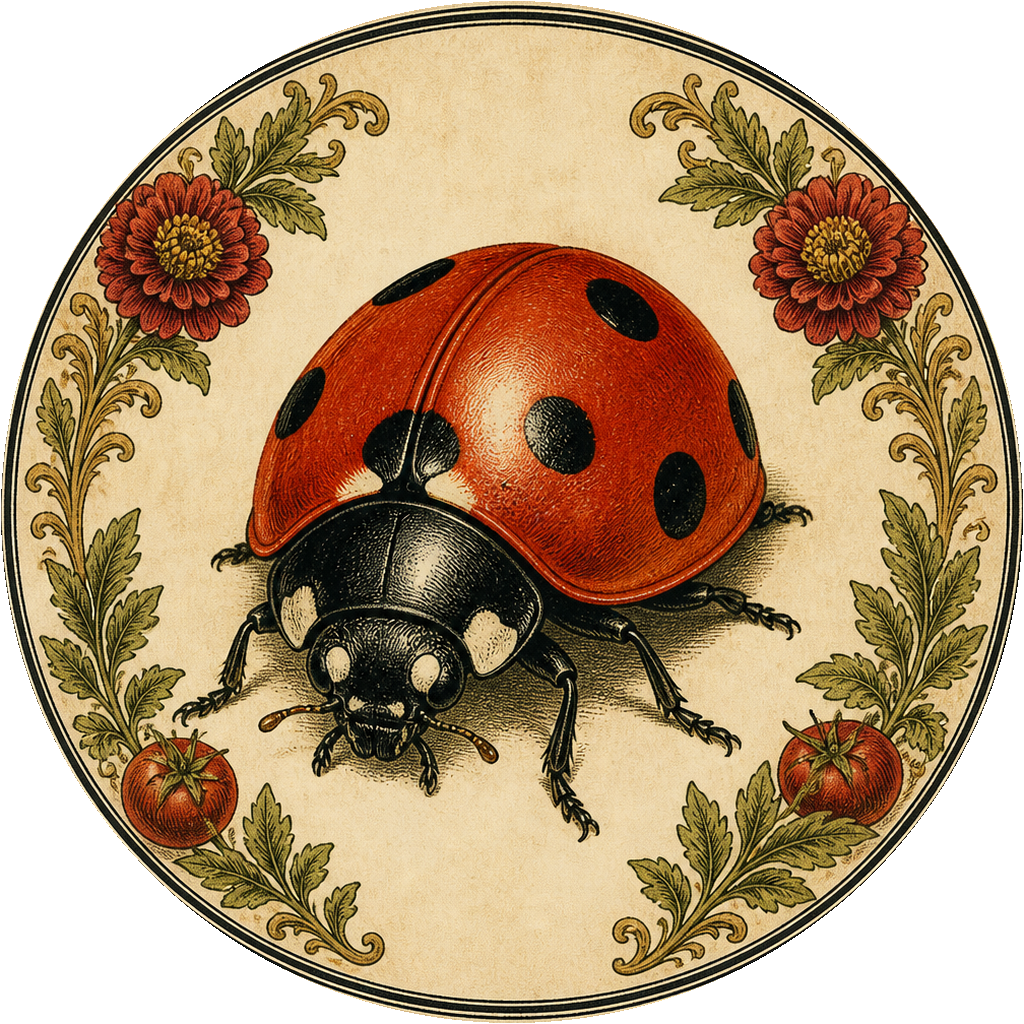
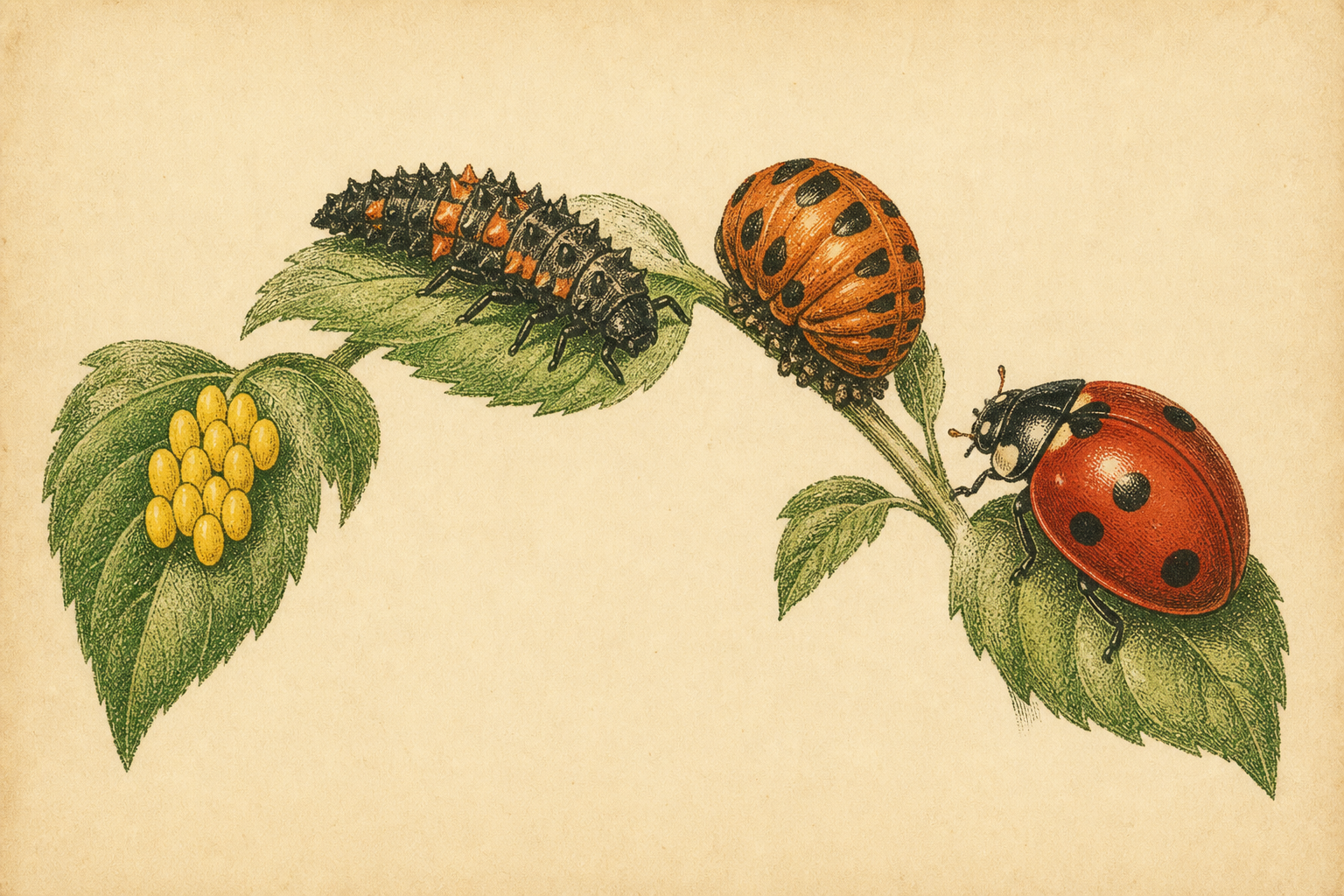
A lady beetle is a complete metamorphosis: egg, larva, pupa, adult. The adult is the crate-label insect. The larva does the heavy feeding and looks like a tiny alligator. UF/IFAS notes that gardeners often kill larvae and pupae because they cannot name them.
Eggs
Eggs are yellow and laid in clusters, usually near an aphid colony or other prey. The female places them where a hatchling can eat on the first day.
Larva
Larvae are elongated, flattened, and usually blackish or bluish with orangish spots. ENY-822 says some species wear a white waxy coat and get mistaken for mealybugs. If a white insect is crawling among aphids, it is often a lady beetle larva. This is the stage that takes the most prey.
- Leave alligator-shaped larvae on infested plants.
- Do not wash a colony off a stem until you have looked for larvae.
- If you must move one, move the leaf it is on. Do not pinch the body.
Pupa
The pupa keeps larval colors but does not walk or feed. It is glued to a leaf or stem. Knocking it off ends that beetle.
Adult
The adult is the hemispherical beetle. It keeps hunting. When prey is scarce, Hippodamia convergens takes pollen and nectar, which is why dill, fennel, and alyssum matter in a yard that wants beetles to stay.
Questions
How long does a generation take?
Warm weather shortens it. Florida heat can run several generations in a year. Count stages on the plant rather than a calendar from another state.
Sources
- ENY-822 / IN120 Invertebrates as biological control agents. Larvae look like tiny alligators. Native Cycloneda sanguinea and Hippodamia convergens.
- EENY-170 / IN327 Lady beetles of Florida. UF/IFAS Featured Creatures. About 105 Coccinellidae in Florida.
- EENY-592 / IN1037 Convergent lady beetle. Hippodamia convergens. Pollen and nectar when prey is scarce. Wild-collected sales.