Yard
Encourage lady beetles
A yard that already has aphids on new growth already has the food. UF/IFAS says purchased lady beetles often fly away if the site does not suit them. Keep bloom, skip a whole-yard spray, and leave the alligator-shaped larvae. That is the habitat program.
Keep some prey
A sterile yard has nothing to hunt. Tolerate a light aphid colony on new milkweed, citrus flush, or roses long enough for eggs to hatch. Wipe a stem only when the plant is actually failing.
Pollen and nectar
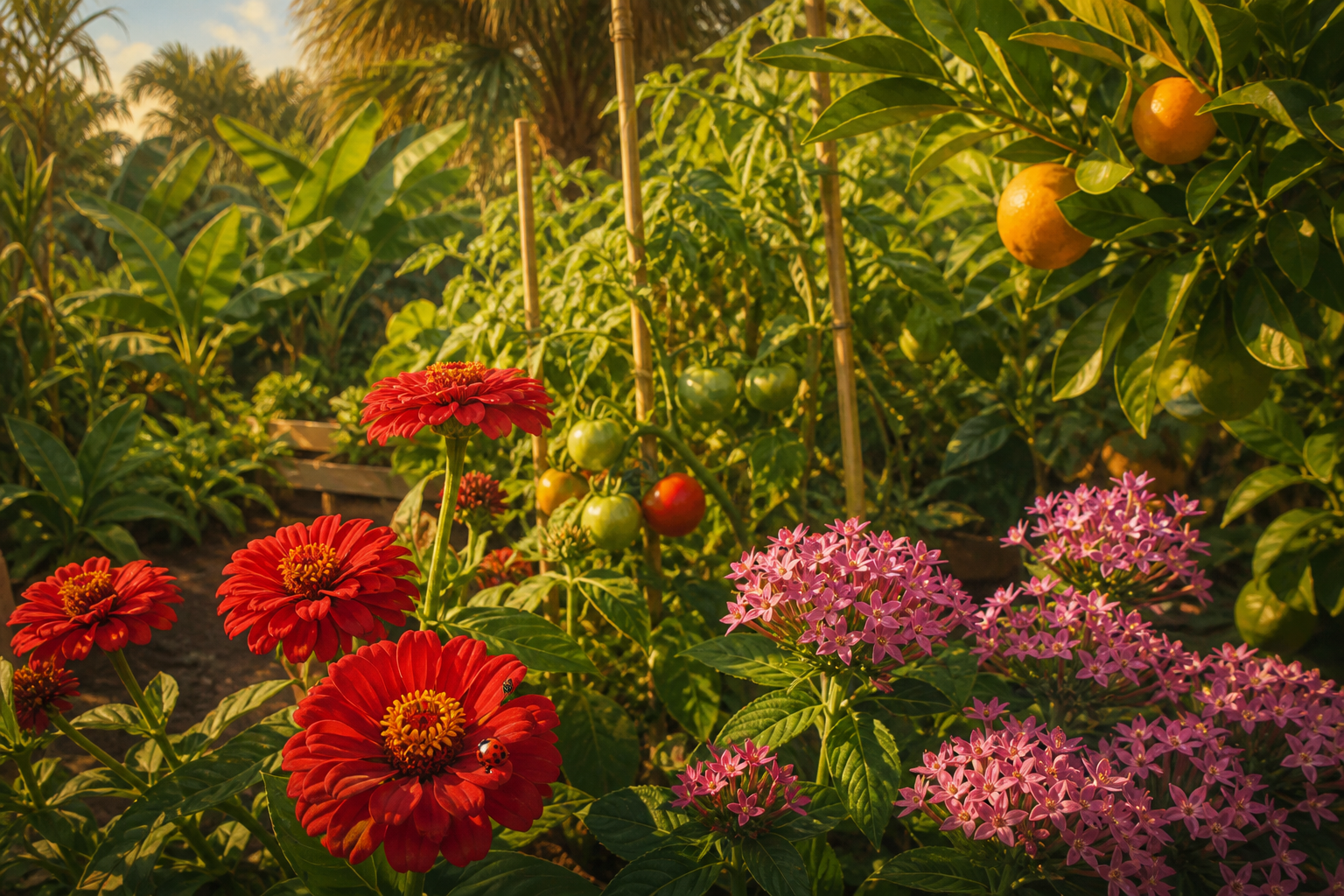
Hippodamia convergens feeds on pollen and nectar when prey is scarce. Umbels and small flowers — dill, fennel, cilantro, alyssum, cosmos — hold adults between aphid waves. Mix them with the vegetables, not in a separate ‘insect garden’ that never gets watered.
Spray
Broadcast insecticide on bloom kills hunters with the pests. Florida-Friendly Landscaping asks for the least toxic option last. If a plant must be treated, treat that plant, in evening, off bloom, and read the label. Brand names stay off this page.
Water
Shallow water — a saucer with stones — serves bees and beetles in a dry spell. Florida rain does the rest for much of the year. Do not drown a pupa with a hard jet every afternoon.
Questions
Should the yard buy a bag of beetles?
UF/IFAS Extension notes released beetles may not establish. IN849 is the buying guide. Habitat on site is the first tool.
Sources
- Ladybugs in Florida. UF/IFAS Extension. Predators of aphids; purchased beetles often fly away.
- EENY-592 / IN1037 Convergent lady beetle. Hippodamia convergens. Pollen and nectar when prey is scarce. Wild-collected sales.
- IPM-146 / IN849 Purchasing and using commercial natural enemies. UF/IFAS. Read before buying beetles in a bag.
- Florida-Friendly Landscaping. Nine principles for Florida yards.