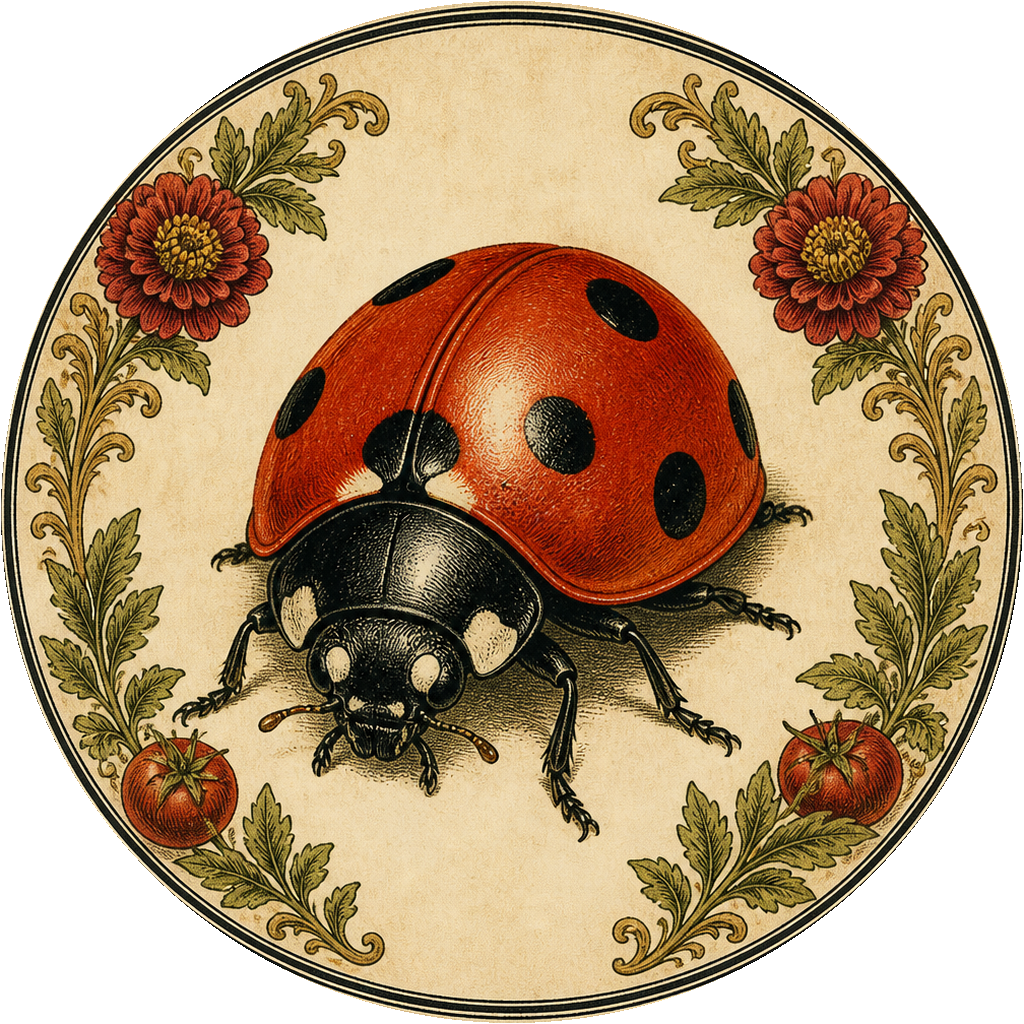
Adventive
Multicolored Asian lady beetle
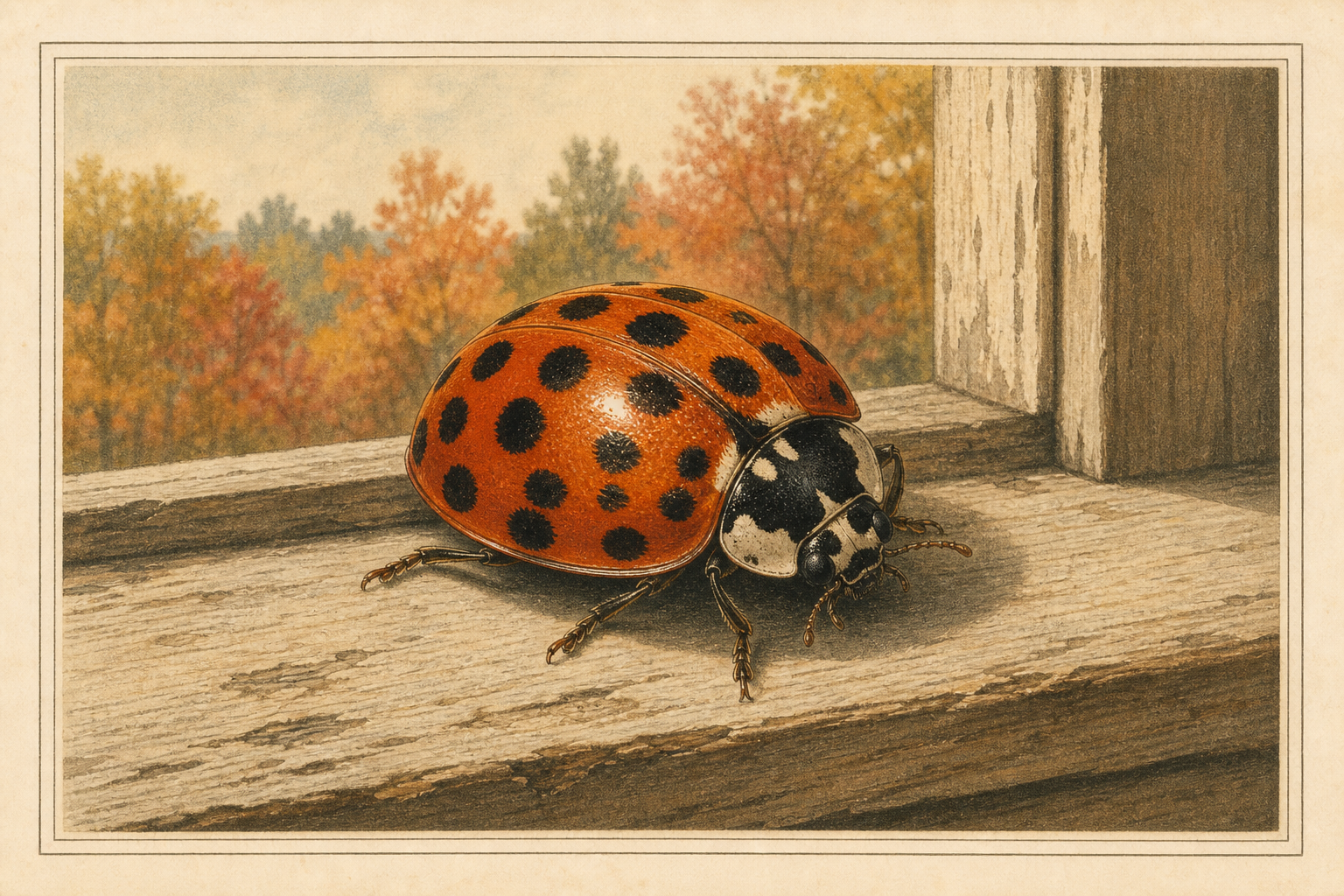
Harmonia axyridis was moved around the United States for classical biological control and also arrived on its own. EENY-204 says it established in the late 1980s and early 1990s and, by 1994, ran from Florida to Canada. Adults may be solid orange, orange with black spots, or red with black spots. In cool weather they pack wall voids and sunlit siding. They are still aphid hunters for most of the year.
How it got here
EENY-204 records purposeful releases and accidental arrivals through the twentieth century. Once established, the beetle spread coast to coast. It is a strong predator of aphids, mites, thrips, scales, and moth eggs, and the paper links it to reduced spraying in some orchard systems.
Color morphs
Do not key a Harmonia on color alone. The same species can look like a seven-spot European beetle or a nearly spotless orange adult. Look at size, the pronotum pattern (often a black M or W on white), and the habit of clustering on buildings.
Houses in cool weather
In fall and winter, adults seek cracks in siding, attics, and wall voids. They can stain and nip. Vacuum and seal. Do not fog a living space for a beneficial beetle that is only overwintering.
How to tell it from natives
Cycloneda sanguinea is usually spotless and smaller in the field. Hippodamia convergens shows two pale converging lines on the pronotum and does not pack Florida houses the way Harmonia does. When unsure, photograph the pronotum and compare to EENY-204, not a children’s sticker.
| Trait | Harmonia axyridis | Cycloneda sanguinea |
|---|---|---|
| Spots | Zero to many; variable | Usually none |
| Pronotum | Often a dark M/W on pale | Mostly black with pale margins |
| Houses | Clusters in cool weather | Does not pack walls |
Questions
Should a yard kill Harmonia?
They eat the same pests natives eat. Seal buildings. Do not spray a garden colony because a few walked indoors in November.
Sources
- EENY-204 / IN361 Multicolored Asian lady beetle. Harmonia axyridis. Color morphs. Indoor overwintering. Established by the 1990s.
- EENY-170 / IN327 Lady beetles of Florida. UF/IFAS Featured Creatures. About 105 Coccinellidae in Florida.
- ENY-822 / IN120 Invertebrates as biological control agents. Larvae look like tiny alligators. Native Cycloneda sanguinea and Hippodamia convergens.